Yuva Fashona · Kenya
How Yuva Fashona got its Merchant Center suspension lifted, on a store we built from scratch.
Where things
actually stood.
The Brief
"We need a store that works, takes M-Pesa, and gets us back on Google Shopping."
Diagnose first.
Then rebuild.
Every engagement starts with a full audit — not a pitch. What we find determines exactly what gets built, not the other way round.
Build the store from scratch
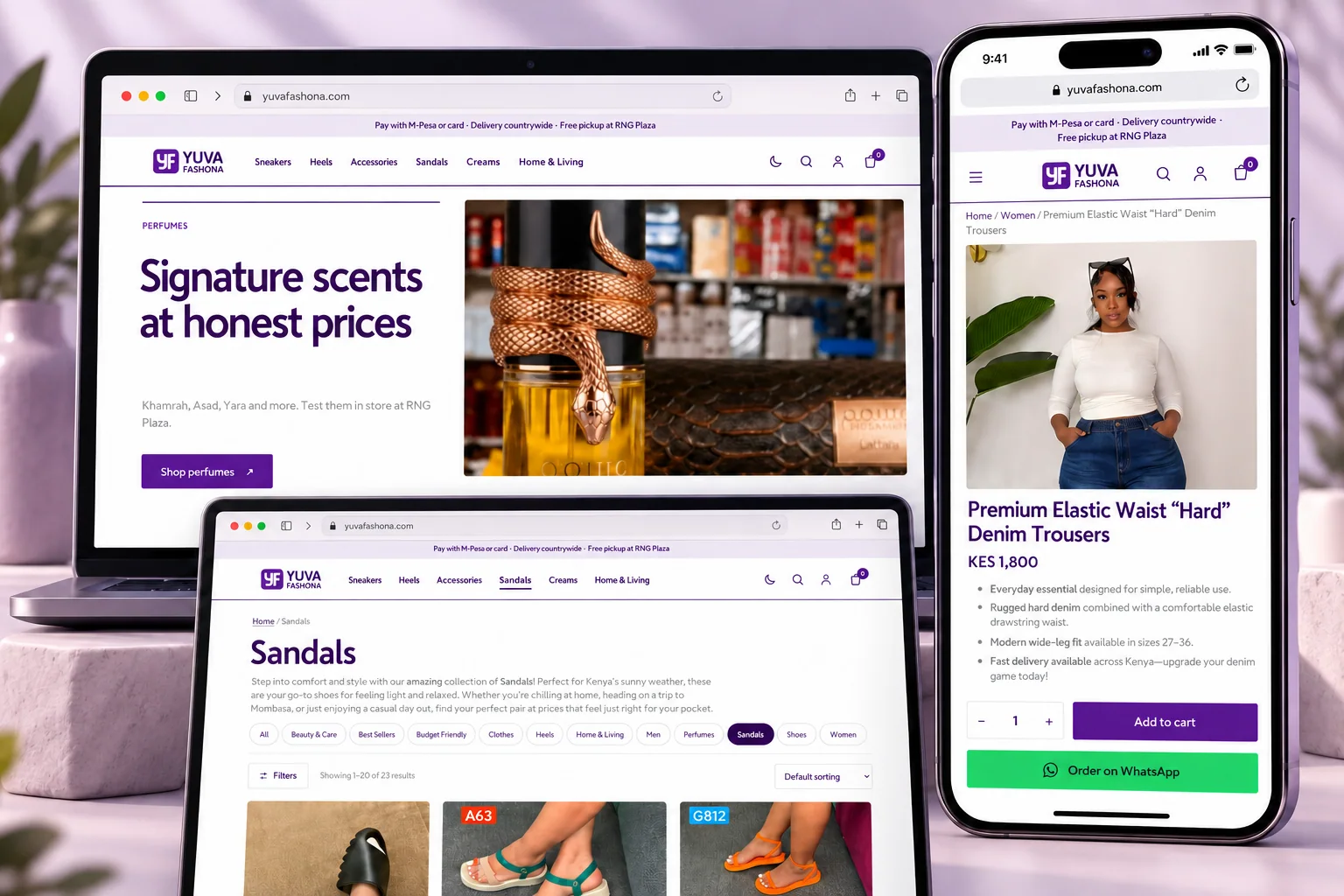
There was no working store to fix, only an incomplete static placeholder. We built a custom, lightweight theme: one stylesheet and one deferred JavaScript module of about 22 KB, with a build size budget so it stays that small as the catalogue grows.
A checkout built for phones and M-Pesa
A one-page, phone-first checkout with Pesapal for M-Pesa and card payments. Customers whose payment doesn't go through get reminders at 15 minutes and 6 hours.
Delivery and catalogue that match the policies
Flat delivery fees by zone, shown before checkout and stated the same way in the shipping policy. 99 live products, with sizes as a filterable attribute.
Policies and business details that tell one story
Privacy, shipping, returns, payment and terms pages, each with the business email, address and a contact option. Delivery times, return windows and payment methods match the checkout and Merchant Center exactly, and business details match across the website, Merchant Center and Google Ads.
A clean feed and a clean site
Products from brands we couldn't verify were kept out of the Google feed. A risky plugin was removed. Then a full pre-submission check: no 404s, no broken links, no placeholder text, and the contact page linked from every policy.
One documented review request
Only once everything was fixed did we request a review, stating what was wrong, what we changed and why the store now complies. The account-level Misrepresentation suspension was lifted.
Week by week.
No black box.
Brief and build
Custom theme, catalogue structure and size budget. The store was built from scratch; the previous site was a non-functional placeholder.
BuildCheckout, payments and delivery
Phone-first one-page checkout, Pesapal for M-Pesa and cards, payment-recovery reminders, and flat delivery fees by zone.
ConvertPolicies, feed and trust signals
Policy pages rewritten to match the checkout, business details aligned across Google surfaces, unverified-brand products kept out of the feed, and a risky plugin removed.
FixReview request and reinstatement
Final pre-submission audit, then one documented review request. The suspension was lifted in October 2026, about three months after work started.
Suspension liftedThe numbers,
unfiltered.
We don't cherry-pick timeframes or hide the metrics that don't flatter us. Here's what changed, plainly.
Your pipeline deserves
better than guesswork.
Start with a free Digital Health Check — we'll audit your current setup and tell you exactly what to fix first.